


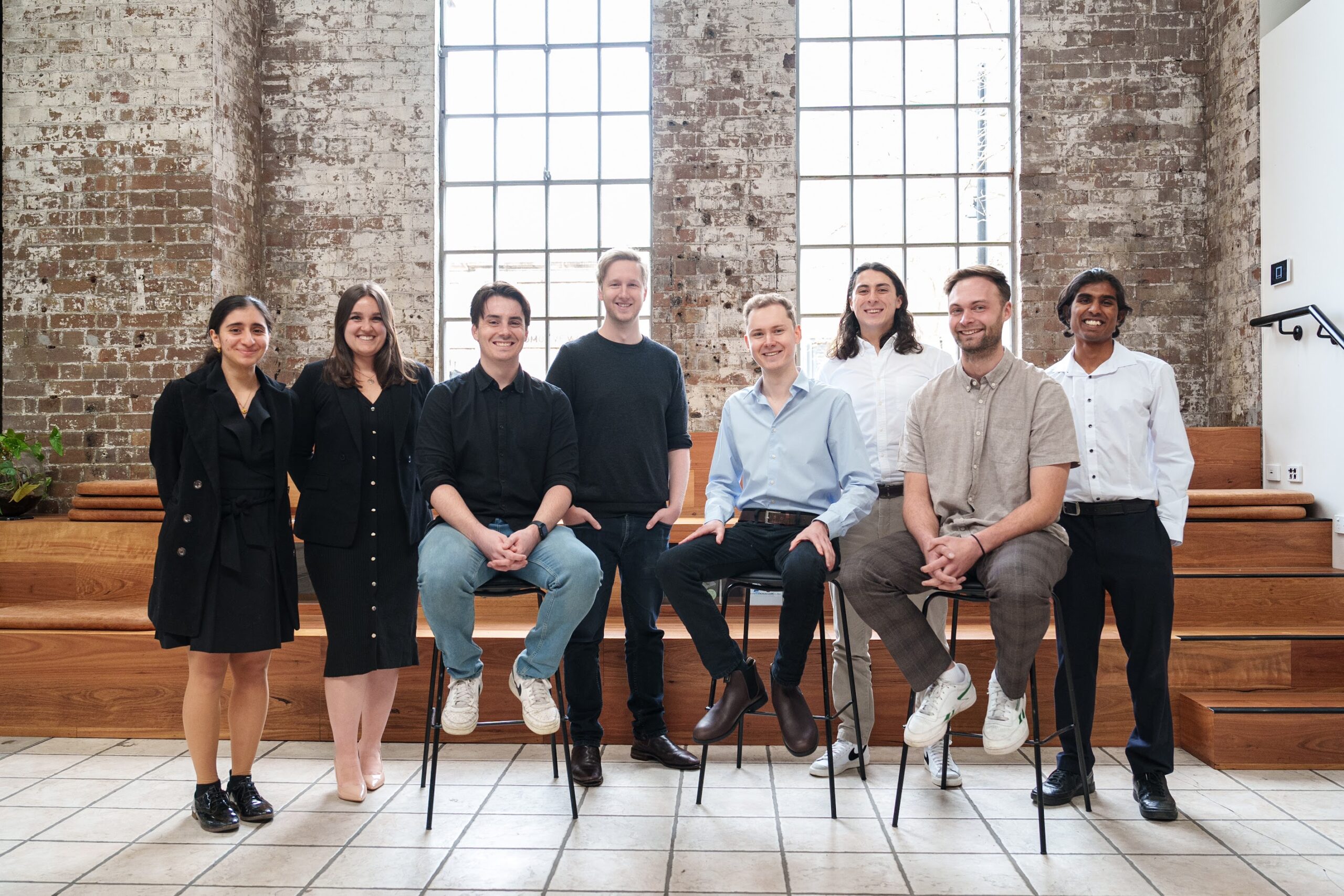
Investible is excited to have participated in VXB Aerospace’s A$1m Pre-seed round alongside Jelix Ventures, Brindabella and strategic angels.
Led by Alexander Ryan (CEO & Founder), VXB has developed an AI-powered software platform (Zephyr) which allows satellite manufacturers to optimally design electric propulsion hall effect thrusters which can be easily integrated with their existing satellite body designs. Their design software will allow satellite manufacturers to build hall effect thrusters ~5x faster and ~40% cheaper with optimal performance on par with the best in market.
VXB was also recently selected as 1 of 12 global startups to take part in the most recent cohort of the Techstars Space Accelerator, which runs in partnership with the US Space Force and NASA’s Jet Propulsion Laboratory. Prior participants of the accelerator (e.g. Orbit Fab, Morpheus Space, Pixxel) have gone on to generate significant revenue, partnerships and raise growth-stage funding from reputable US deep tech investors.
Strong market tailwinds given the forecasted growth in the number of satellites to be launched into space
The global space market is rapidly growing, with industry experts forecasting a ~20x increase in active satellites to 100,000+ (or ~8 satellites launched per day) by 2030, equating to a ~US$1 trillion global addressable market. In addition to this growth, satellite designs are becoming increasingly more complex, expensive and are being delivered on faster timelines with less experienced teams (i.e. requiring more efficient and novel methods of mass manufacturing at scale).
With the influx of new satellites launching into orbit, there is now a greater need for smaller satellite manufacturers (who lack the budget and capabilities of larger manufacturers) to use AI simulation software to help them optimally design and build hall effect thrusters, of which most satellites are primarily designed around / dependent on.
VXB’s novel and differentiated AI-powered software design platform is well positioned to capitalise on the strong tailwinds of the global space industry.
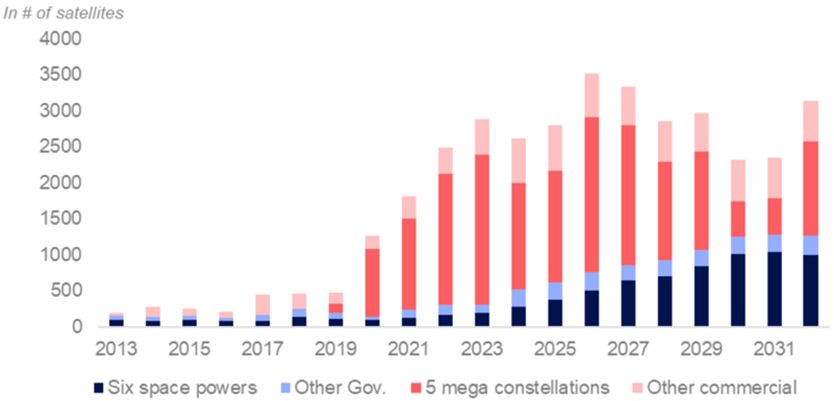
Forecast number of new satellites launched into space by year (Source: Euroconsult)
Novel technology which could expedite the mass production of small satellites
VXB’s design software (Zephyr) leverages proprietary AI algorithms to simulate the optimal design parameters for hall effect thrusters to be compatible with a customer’s overarching hardware (i.e. bespoke solution). This approach is novel in the industry, given small satellite manufacturers typically use designs licensed from research labs and NASA that were not developed with mass production in mind (i.e. they are largely working with high overhead costs to meet demand expectations).
Aerospace industry experts validated this hypothesis by noting that if Zephyr was accurately producing optimal design results, then it would be very appealing for small satellite manufacturers, given most are currently focused on improving hall effect thruster manufacturing efficiency (for mass production), and are increasingly cost conscious while wanting to maintain performance.
VXB has also managed to develop core IP which enables the hall effect thrusters to be compatible with newer propellants (i.e. argon gas) which is significantly cheaper and more abundant than incumbent propellants (e.g. xenon and krypton).
Although it is still early days for VXB, the company has managed to land 6 LOIs potentially worth A$2m+ from reputable Australian space organisations and US-based space startups.

The VXB team hard at work in their lab at Botany, New South Wales
Ambitious and talented founder with space and engineering experience
Alex (CEO & Founder) has worked in the space industry his entire career since 2018, where he holds a PhD in Aerospace Engineering at the University of Sydney and helped develop a novel helicon plasma propulsion system using AI-powered software for small satellites (this was the genesis of him wanting to start VXB).
He was also Head Aerospace Engineer at Industrial Sciences Group (ISG), where he led the development of a best-in-class Decision Support System (DSS) for satellite collision detection for the CARA (Conjunction Assessment and Risk Analysis) group at the NASA Goddard Spaceflight Centre.
Alex has also hired a strong founding team of 7 with technical engineering and chemistry experience around him and will look to add more talented software engineers to bolster the team.
We are thrilled to be backing Alex and the VXB team as they look to continue building the Zephyr platform and capitalise on the great momentum from the Techstars Space Accelerator.

Written by
Nicholas Ooi

.png)

.jpeg)
stay in the loop
The Investible newsletter is your source for our latest news, insights and more


The Investible group of companies includes various entities who are corporate authorised representatives (CAR) of Boutique Capital Pty Ltd (BCPL) AFSL 508011. The full list of entities are detailed here.
CAR has taken all reasonable care in producing all the information contained in the website including but not limited to reports, tables, maps, diagrams and photographs. However, CAR will not be responsible for loss or damage arising from the use of this information. The contents of this website should not be used as a substitute for detailed investigations or analysis on any issues or questions the reader wishes to have answered.
You may download the information for your own personal use or to inform others about our materials, but you may not reproduce or modify it without our express permission. To the extent to which this website contains advice it is general advice only and has been prepared by the Company for individuals identified as wholesale investors for the purposes of providing a financial product or financial service, under Section 761G or Section 761GA of the Corporations Act 2001 (Cth).
The information in this website is not intended to be relied upon as advice to investors or potential investors and has been prepared without taking into account personal investment objectives, financial circumstances or particular needs. Recipients of this information are advised to consult their own professional advisers about legal, tax, financial or other matters relevant to the suitability of this information.
Any investment(s) summarised in this website is subject to known and unknown risks, some of which are beyond the control of CAR and their directors, employees, advisers or agents. CAR does not guarantee any particular rate of return or the performance, nor does CAR and its directors personally guarantee the repayment of capital or any particular tax treatment. Past performance is not indicative of future performance.
All investments carry some level of risk, and there is typically a direct relationship between risk and return. We describe what steps we take to mitigate risk (where possible) in the investment documentation, which must be read prior to investing. It is important to note risk cannot be mitigated completely.
Whilst the contents of this website is based on information from sources which CAR considers reliable, its accuracy and completeness cannot be guaranteed. Data is not necessarily audited or independently verified. Any opinions reflect CAR’s judgment at this date and are subject to change. CAR has no obligation to provide revised assessments in the event of changed circumstances. To the extent permitted by law, BCPL, CAR and their directors and employees do not accept any liability for the results of any actions taken or not taken on the basis of information in this website, or for any negligent misstatements, errors or omissions.
Subscribe to our newsletter
Be the first to receive the latest news, insights and resources from Investible